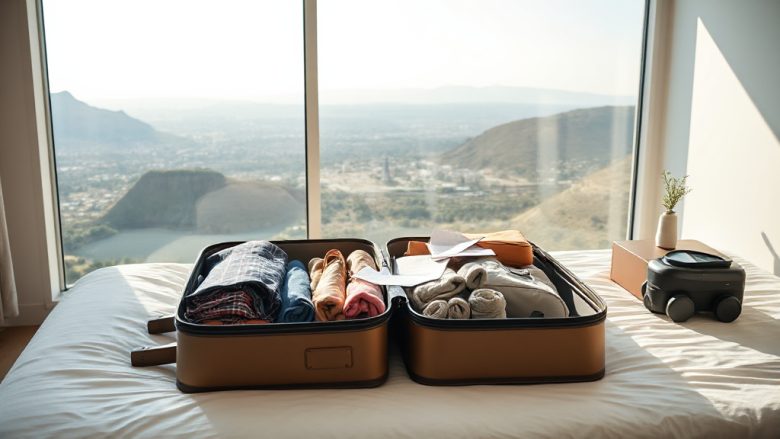
Most packing mistakes are not about forgetting things. They are about bringing the wrong things for the trip you are actually taking. I have stood at a baggage carousel in Reykjavik watching a suitcase that never arrived, worn sandals through a rainy week in Lisbon, and paid a small fortune at a hotel reception for a phone charger I already owned. Every one of those problems started with a decision I made at home, usually while rushing, usually while telling myself I would definitely need that fourth pair of shoes.
The common travel packing mistakes to avoid are almost never dramatic. They are small, boring, repetitive errors that quietly drain money, energy and goodwill from a trip. The good news is that they are also easy to fix once you can see them coming. Below are the ten that cause the most damage, grouped by the stage where they happen: before you pack, inside the bag, and at the airport.
Before You Pack: The Mistakes That Start at Home
These are the errors that happen before a single item touches the suitcase. They are the most expensive because they are the hardest to correct once you are standing in a departure lounge.
Mistake 1: Packing for a fantasy version of the trip. This is the big one. You picture yourself at a rooftop dinner, on a coastal hike, in a gallery, at a beach club, and you pack for all four people you might become. The trip is usually one or two of those things. The fix is blunt: write down what you will actually do each day, then pack only for that list. If the itinerary says museums and rain, the linen sundress stays home.
Mistake 2: Leaving packing until the night before. Late-night packing is where the panic decisions happen. You throw in extras because you cannot remember what you already own, and you forget the one thing you genuinely need because your brain is fried. The fix is a two-stage pack: lay everything out three days before, then pack the bag the night before. The lay-out stage catches the gaps while shops are still open and you still care.
Mistake 3: Ignoring the weather and the culture you are flying into. A forecast is not a guarantee, but it is a strong hint. Packing for the destination you imagined rather than the one on the weather app is how people end up buying an emergency raincoat at a tourist markup. The fix is a five-minute check: look at the ten-day forecast, the average temperatures, and one line about local dress norms. That is enough to stop most wrong-item decisions.
Mistake 4: Building the trip around a single outfit. One formal outfit is fine. Building half a suitcase around a wedding, a dinner or a photoshoot that lasts three hours is not. The fix is to treat special-occasion clothing as a small, separate bundle and keep the rest of the bag practical. If the outfit is bulky, ask whether it can be worn on the plane or hired at the destination.
There is a useful mental test for all four of these. Before anything goes in the bag, ask: would I be annoyed if I had to carry this around a train station for an hour? If the answer is yes, it needs a better reason than maybe.
In the Bag: Where Good Intentions Turn Into Dead Weight
This is the stage where the bag gets heavier than the trip requires. These mistakes are invisible at home and painfully obvious by day three, when you are repacking on a hotel bed at midnight.
Mistake 5: Packing for every possible weather event. Two jumpers, a rain shell, a warm layer, a light layer, and a backup for each. The fix is a simple rule: one warm layer, one waterproof layer, and nothing else. Layers do the work, not volume. If you are genuinely heading somewhere with wild temperature swings, pick garments that combine rather than multiply.
Mistake 6: Treating shoes as a rounding error. Shoes are the heaviest, least compressible thing most people pack, and they are usually the item people over-pack most. Three pairs is the realistic ceiling for most trips: one comfortable walking pair worn on travel days, one smarter pair, and one pair for weather or terrain. The fix is to wear the bulkiest pair in transit and stuff small items inside the others.
Mistake 7: Packing full-size toiletries and duplicates. A full bottle of shampoo, a second deodorant, three chargers, two adapters. The fix is to decant into small refillable bottles, keep one of each essential, and check whether the accommodation already supplies the basics. A quick message to the hotel saves more weight than any folding technique.
Mistake 8: Rolling everything into a shapeless mass. Rolling is not automatically better than folding. A bag that is all rolls has no structure, so it collapses and wastes space at the edges. The fix is a mix: roll soft items like t-shirts and knitwear, fold structured items like shirts and trousers, and use packing cubes or pouches to create zones. Zones also mean you can find things without unpacking the whole bag.
Mistake 9: Forgetting the boring essentials. Medication, spare glasses, a basic first-aid kit, a universal adapter, a small power bank, and a photocopy of important documents. These are the items that cause real problems when they are missing, and they weigh almost nothing. The fix is a permanent packing list for this category that lives in your phone and gets checked every single time, regardless of trip length.
One more in-bag error worth naming: packing valuables in a checked bag. Passports, medication, jewellery, laptops and anything you would hate to lose should be in the cabin bag. Airlines lose bags. It is rare, but it happens, and the fix costs nothing.
At the Airport: The Final Mistakes That Cost Real Money
By this point the bag is packed. The remaining mistakes are about how you present it and how you carry it, and they are the ones that turn a smooth departure into a stressful one.
Mistake 10: Not weighing the bag before you leave. This is the single most avoidable airport expense. Airline weight limits vary, and a bag that felt fine at home can be over the limit on the check-in scale. The fix is to weigh the packed bag at home on a luggage scale or a bathroom scale, and leave a small buffer for souvenirs. If you are close to the limit, move heavy items into your cabin bag or wear them.
There are a few smaller airport-stage errors that sit alongside the weighing mistake. Wearing complicated clothing through security slows you down. Packing liquids where you cannot reach them means unpacking the whole bag at the scanner. Leaving the cabin bag packed so tightly that you cannot access a charger or a book for the flight is a self-inflicted annoyance. The fix for all of them is the same: build the bag so the things you need first are the things you can reach first.
And then there is the return leg. Most people pack beautifully on the way out and then cram everything back in on the way home, which is how zips break and how you end up paying for excess baggage on a flight you have already taken. The fix is to leave a little space and a little weight allowance on the outbound trip, and to treat the last night as a packing night rather than a morning scramble.
None of this requires special equipment or a personality transplant. It requires deciding, in advance, what kind of trip you are taking and packing for that trip only. The frequent flyers who seem to pack in twenty minutes are not doing anything clever. They have simply stopped making the same ten mistakes, and they have a short list they trust. Build your own list, keep it on your phone, and update it after every trip with the one thing you did not need and the one thing you wish you had brought. After two or three trips, the list becomes the system, and packing stops being a source of dread.