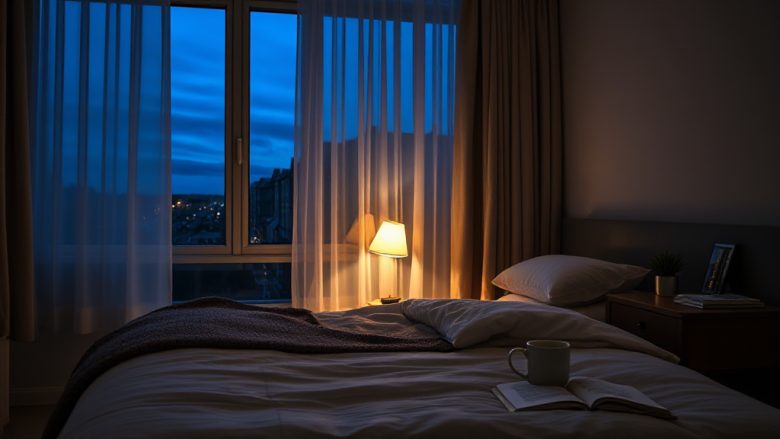
Good sleep is less about willpower and more about timing, light and temperature. That is the starting point for this complete guide to healthy sleep habits in the UK, because British homes, British weather and British working patterns create a particular set of obstacles. A bedroom in a Victorian terrace in Leeds behaves differently from a new-build flat in Bristol. A nurse finishing a night shift at 7am faces a different problem from an office worker who cannot switch off at 11pm.
The good news is that sleep responds well to routine. Not rigid, military-style routine, but a handful of repeatable decisions about when you get light, when you get warm, when you drink coffee and when you go to bed. This guide walks through those decisions in order of how much difference they tend to make.
Why Sleep Timing Matters More Than Sleep Duration Alone
Most people fixate on the number of hours. Seven to nine is the commonly cited range for adults, and it is a reasonable target. But two people can both sleep seven and a half hours and feel completely different, because consistency matters as much as quantity.
Your body runs on an internal clock, roughly a 24-hour cycle, that governs when you feel alert, when you feel drowsy, when your body temperature dips and when your digestive system is most active. That clock is not fixed. It is reset every day, mostly by light hitting the back of your eye, and to a lesser extent by when you eat and move.
If you go to bed at 10:30pm on weekdays and 1:30am on Saturdays, you are effectively giving yourself jet lag every weekend. The clock drifts later, then you force it back on Monday morning. That mismatch is one of the most common reasons people feel flat on a Monday, and it is fixable.
The practical rule is simple: pick a wake time you can keep seven days a week, and let your bedtime float within about a 45-minute window. A stable wake time anchors everything else. Bedtime tends to follow naturally once your wake time stops moving.
Light: The Most Powerful Lever You Have
In the UK, daylight is a scarce resource for roughly half the year. In December, much of the country gets under eight hours of usable daylight, and for anyone working indoors, the commute may happen in darkness at both ends. That has a real effect on the sleep-wake cycle.
The fix is to get bright light early, ideally within an hour of waking, and to dim it in the evening. Ten to twenty minutes outdoors on a cloudy morning does more for your clock than an hour under office lighting, because outdoor light is dramatically brighter even when the sky is grey. A short walk before work, a coffee standing in the garden, or cycling part of the commute all count.
Evenings are the opposite problem. Modern homes are bright, and screens add a second layer. You do not need to throw your phone in a drawer at 8pm, but you can reduce the intensity. Use lamps rather than ceiling lights, lower the brightness on screens, and consider a warm-toned bulb in the room where you spend the last hour before bed. The goal is contrast: bright days, dim evenings.
If you genuinely cannot get morning light, a light box used for 20 to 30 minutes at breakfast is a reasonable substitute for many people, particularly in the depths of a British winter.
Temperature and the British Bedroom
Sleep onset is easier when your core temperature drops slightly. That is why a warm bath an hour or two before bed tends to help: it pulls blood to the skin, and the subsequent cooling is what makes you drowsy.
UK bedrooms are notoriously variable. A loft room in July can sit above 28°C, while a single-glazed bedroom in an old stone cottage in January can feel like a fridge. Both extremes disrupt sleep.
For most adults, somewhere around 16 to 19°C is comfortable, with bedding adjusted to taste. In summer, blackout curtains used during the day keep heat out, and opening windows at night when it is safe to do so helps. A fan moving air across the skin is often more effective than trying to cool the whole room. In winter, the priority is warmth without stuffiness: a hot water bottle or an extra layer you can remove is better than a room heated all night, which tends to dry the air and disturb breathing.
Noise matters too. Traffic, neighbours and early bin collections are hard to control, but earplugs, a white noise app or simply a consistent background hum can smooth the edges. Consistency is the point: the brain habituates to steady sound far better than to intermittent thumps.
Caffeine, Alcohol and the UK Diet
Caffeine has a half-life of roughly five to six hours in most adults, meaning a 4pm coffee still leaves a meaningful amount in your system at 10pm. If you are sensitive, that is enough to delay sleep and reduce deep sleep even if you fall asleep fine.
A practical cut-off is early afternoon, around 2pm for most people, and earlier if you know you are a slow metaboliser. Remember that tea, cola, energy drinks and some painkillers contain caffeine too. A strong cup of builder’s tea at 6pm is not nothing.
Alcohol is the more deceptive one. A glass of wine or a few pints may help you fall asleep faster, but it fragments sleep in the second half of the night, suppresses REM sleep and worsens snoring. Many people who wake at 3am and cannot get back to sleep are feeling the tail end of an evening drink. If you drink, leaving three hours between your last drink and bed makes a noticeable difference for most people.
Food timing matters less than caffeine and alcohol, but a very heavy meal within an hour of bed can cause reflux and discomfort. A light snack is fine if hunger keeps you awake. There is no magic bedtime food, despite what you may read.
Shift Work, Parenting and Other UK Disruptors
Shift work is the hardest case. The NHS alone employs hundreds of thousands of people on rotating patterns, and the same applies to hospitality, logistics, emergency services and care work. You cannot fully override biology, but you can reduce the damage.
After a night shift, the priority is getting to sleep quickly and protecting that sleep. Wear sunglasses on the way home, keep the bedroom dark and cool, and use earplugs or a white noise machine. Resist the urge to do a full day’s errands before sleeping. A shorter block of sleep in the morning plus a nap before the next shift often works better than trying to force one long daytime sleep.
Parents of young children face a different version of the same problem: fragmented sleep that is not fully in your control. The realistic goal is not perfect sleep but protected sleep. Trade mornings with a partner where possible, nap when you can, and lower your standards for everything else for a season.
Other common disruptors include a warm bedroom in a heatwave, a partner who snores, anxiety about work, and the temptation to catch up on sleep at the weekend. All of these respond better to routine than to willpower.
When to Seek Help
Most sleep problems improve with the habits above. Some do not, and a few are worth taking to a GP.
Loud snoring with pauses in breathing, gasping or choking during sleep, and daytime sleepiness despite adequate time in bed can point to obstructive sleep apnoea. This is common and treatable, and it is not something to manage with lifestyle tweaks alone.
Persistent difficulty falling asleep or staying asleep for more than three months, on most nights, despite reasonable habits, may be chronic insomnia. The first-line treatment is not a sleeping tablet; it is a structured behavioural programme, usually cognitive behavioural therapy for insomnia, which is available through many GP practices and self-referral services.
Also worth a conversation: restless legs that disrupt sleep, unusual movements during sleep, and sleep problems that started alongside low mood or anxiety. Sleep and mental health are tightly linked in both directions.
Frequently Asked Questions
Are naps a good idea?
For most people, a short nap of 10 to 20 minutes in the early afternoon can improve alertness without affecting nighttime sleep. Longer naps, or naps after 3pm, tend to make it harder to fall asleep at night. If you struggle with insomnia, it is usually better to avoid napping altogether for a few weeks while you rebuild your sleep drive.
Should I take melatonin?
Melatonin is not a general sleeping pill. It works best for shifting the body clock, for example after long-haul travel or for some shift workers, and it is available on prescription in the UK for certain uses. For ordinary difficulty falling asleep, the evidence is modest. If you are considering it, speak to a pharmacist or GP first, especially if you take other medication.
What can I do about snoring?
Losing weight if you are overweight, avoiding alcohol close to bedtime, and sleeping on your side can all reduce snoring. Nasal strips help some people with congestion. If snoring comes with pauses in breathing, gasping or heavy daytime sleepiness, see a GP, because that pattern needs proper assessment rather than home remedies.
How long does it take to fix a sleep problem?
With consistent habits, many people notice a difference within two to three weeks. Rebuilding a disrupted sleep pattern after illness, travel or a stressful period often takes a bit longer. If nothing improves after a month of genuine effort, that is a good signal to seek professional advice.