Shared Stacks in Imirim Buildings: A Manager’s Guide to Drain Emergencies
When a stack backup hits three apartments on the same Imirim building line at once, the first call a síndico makes is rarely to a plumber—it is to a specialist who can read the whole vertical system before anyone starts opening cleanouts. That call usually goes to a desentupidora Imirim São Paulo SP team, because a shared stack is not a single-apartment problem and cannot be treated like one. This guide is written for condominium managers who need to diagnose the line, authorize the right scope of work, split the cost fairly, and keep residents informed without turning a drain emergency into a governance crisis.
Why a Stack Backup Is Never a One-Apartment Problem
In a typical Imirim building, the vertical stack collects waste from every unit on the line before it reaches the ground-level collection point. When the blockage sits below the highest affected apartment, wastewater backs up into the lowest fixtures first—usually the floor drain or the shower tray—and then climbs. Three apartments reporting the same symptom at the same hour is a strong signal that the obstruction is in the common stack or the horizontal branch that serves them, not in any single unit’s trap.
That distinction matters because the legal and financial responsibility changes depending on where the blockage sits. A clog inside one apartment’s internal branch is the owner’s problem. A clog in the vertical stack, the building’s horizontal collector, or the inspection box in the common area is the condominium’s problem. Getting this wrong in either direction creates disputes that outlast the repair itself.
Managers should also resist the instinct to call the first number that answers. A general handyman with a manual snake can punch through a soft blockage and leave the real cause—roots, grease, scale, or a collapsed section—untouched. The line backs up again in two weeks, and by then residents are convinced the building has a chronic problem. A desentupidora Imirim team that works with stack systems daily will inspect before clearing, which is the only way to know what you are actually dealing with.
Diagnosing the Line Before Anyone Opens a Cleanout
Diagnosis is the stage where good managers save the most money. Before any equipment goes into the stack, the technician should map the affected line: which apartments share it, where the cleanouts are, and whether the building has accessible inspection boxes at ground level. In older Imirim buildings, that map often exists only in the síndico’s head or in a hand-drawn sketch from a previous repair.
What a proper diagnosis involves
- Confirming which fixtures back up and in what order, which reveals the direction and depth of the blockage.
- Locating and opening the correct cleanout rather than the nearest one, to avoid pushing waste into a neighboring line.
- Using a camera inspection on recurring blockages to identify roots, grease buildup, scale, or structural damage.
- Checking venting, because a stack that drains slowly without a clear clog is often a venting problem rather than an obstruction.
A camera inspection is not upsell on a first-time clog. It becomes essential when the same stack backs up twice within a few months, when multiple units are affected simultaneously, or when the building has mature trees near the ground-level collector. Recurring backups are a symptom, not a diagnosis, and treating them as routine unclogging jobs is how buildings end up paying for the same repair three times.
When hydrojetting is the right tool
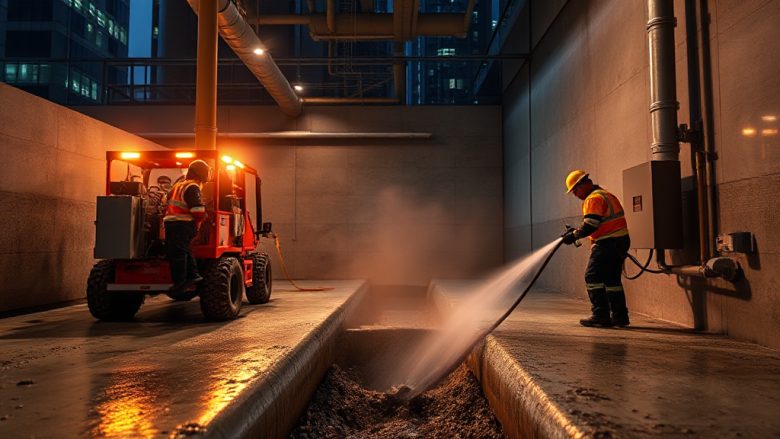
Hydrojetting uses high-pressure water to scour the full pipe wall, removing grease, scale, and roots that a snake only perforates. For shared stacks with years of accumulated buildup, it is often the difference between a temporary clear and a lasting one. It is not appropriate for every line—fragile or already-damaged pipes need assessment first—so the diagnosis should always come before the method is chosen.
Authorization, Scope, and Cost-Splitting in the Condominium
The manager’s job during the emergency is not to supervise the technician but to authorize the correct scope quickly and document it. Most Imirim condominium conventions give the síndico authority to approve emergency repairs up to a certain value without a general assembly, precisely because drain backups cannot wait for a scheduled meeting. Know that limit before the emergency, not during it.
Cost-splitting follows the location of the blockage. When the obstruction is in the common stack or collector, the expense is typically borne by the condominium’s maintenance fund, not by the affected apartments. When the blockage is inside a single unit’s internal plumbing, the owner covers it. When the cause is ambiguous—for example, a clog that formed in the common line but was triggered by improper disposal in one unit—the síndico should document the inspection findings and let the assembly decide rather than making an ad hoc ruling.
A simple authorization checklist
- Get the diagnosis in writing, including the location and nature of the blockage.
- Approve the scope that matches the diagnosis, not a vague “unclog the stack” instruction.
- Record the start time, the equipment used, and the final condition of the line.
- File the inspection footage or report with the building’s maintenance records.
Documentation is what protects the síndico at the next assembly. A one-page report showing where the blockage was and what was done settles most cost disputes before they start. It also builds a maintenance history that makes future diagnosis faster and cheaper.
Communicating With Residents During and After the Repair
Residents in a stack backup are frightened, inconvenienced, and often angry. The manager’s communication style in the first hour sets the tone for how the whole event is remembered. A short, factual message—what happened, which units are affected, what is being done, and when the next update will come—is worth more than a long explanation.
Avoid naming a cause before the diagnosis is complete. If you tell residents it was “someone’s fault” and the inspection later shows a root intrusion in the common line, you have created a dispute you cannot easily undo. State what you know, state what you are doing, and state when you will know more.
Practical communication steps
- Notify affected units first, then the wider building, so the people dealing with water on the floor hear from you before they hear rumors.
- Ask affected residents not to use fixtures on the stack until the line is cleared, and explain why.
- Post a follow-up after the repair summarizing what was found and what preventive step, if any, is planned.
- For recurring issues, consider a short building notice explaining what should not go down drains—wipes, grease, and food waste are the most common culprits in shared lines.
When the work is done, a brief note on the outcome and any recommended preventive maintenance helps residents see the repair as part of a managed system rather than a random expense. That framing matters at budget time, when preventive hydrojetting or a scheduled camera inspection competes with other building priorities.
Preventive Maintenance for Shared Stacks in Imirim Buildings
Most stack emergencies in Imirim buildings are predictable. Grease accumulates in kitchen lines, roots enter older clay or concrete collectors, and scale narrows pipes year after year. A modest preventive program—an annual camera inspection on the main collector and periodic hydrojetting on grease-prone lines—costs far less than an emergency repair that damages three apartments and requires restoration work.
Managers who have been through one stack backup tend to become the strongest advocates for prevention, because they have seen the alternative. A desentupidora em Imirim São Paulo SP team can usually assess the building’s lines and recommend a realistic schedule based on pipe age, tree proximity, and the building’s history of blockages. That assessment belongs in the annual maintenance plan, not in the emergency budget.
It also helps to keep a simple log of every drain event: date, affected units, location of blockage, method used, and outcome. Over two or three years, that log becomes the most useful document the building has for predicting and preventing the next emergency.
Closing Protocol: What to Do the Moment a Stack Backs Up
Every manager should have a one-page protocol ready before the phone rings. It should include the emergency contact for a drain specialist, the síndico’s authorization limit, the location of cleanouts and inspection boxes, and a short message template for residents. When three apartments flood at once, the manager who has that page in hand makes better decisions under pressure.
The sequence is simple: stop fixture use on the affected stack, call a specialist who can diagnose the line, authorize the scope that matches the diagnosis, document everything, and communicate with residents at each stage. None of these steps requires technical expertise—they require preparation and a clear head. The technical work belongs to the specialist; the coordination belongs to the manager, and that division of labor is what keeps a drain emergency from becoming a building-wide dispute.
Frequently Asked Questions for Imirim Building Managers
Who pays when a shared stack backs up into several apartments?
If the blockage is in the common stack or collector, the condominium typically pays from its maintenance fund. If it is inside one unit’s internal plumbing, the owner pays. The inspection report determines which case applies, so get it in writing.
Can a resident refuse access for the repair?
Access to common areas and to cleanouts serving the stack is normally covered by the building’s convention. If a specific unit must be entered, document the request and the reason, and coordinate a time that works for the resident.
How often should a shared stack be inspected?
An annual camera inspection on the main collector is a reasonable baseline for older buildings. Buildings with mature trees nearby or a history of recurring backups may need more frequent checks.
Is hydrojetting safe for older pipes?
It depends on the pipe condition. A camera inspection should come first, and pressure should be adjusted to the pipe material. A specialist will advise on the right method for the building’s specific lines.