The moment I realised I’d forgotten the tent pegs was the moment I stopped treating camping like a spontaneous adventure and started treating it like a skill. It was 9pm, the light was going, and my tent was flapping in the breeze like a confused seagull. That night taught me more about camping tips for beginners than any glossy magazine ever could. So if you’re planning your first trip, here’s the checklist I wish someone had handed me before I left the house.
1. Start With a Realistic First Trip, Not a Fantasy One
Your first camping trip should not be a three-week wilderness expedition. It should be one night, ideally at a campsite with toilets, running water, and a shop within walking distance. This isn’t cheating. It’s how you learn what you actually need before you commit to anything more ambitious. Pick a site no more than an hour from home. If everything goes wrong, you can pack up and sleep in your own bed without feeling like you’ve wasted a holiday. Choose a weekend with a decent weather forecast, and avoid bank holidays for your first attempt. Crowded sites are louder, pitches are harder to find, and the pressure to get everything right feels ten times higher.
The goal of trip number one is simple: pitch the tent, cook something, sleep, and pack up without a crisis. That’s it. Everything else can wait.
2. Build Your Packing List Around Sleep, Warmth, and Food
Most beginner packing lists are far too long. You don’t need a folding table, a windbreak, or a decorative string of fairy lights on night one. You need to sleep comfortably, stay warm, and eat something hot. Everything else is a bonus.
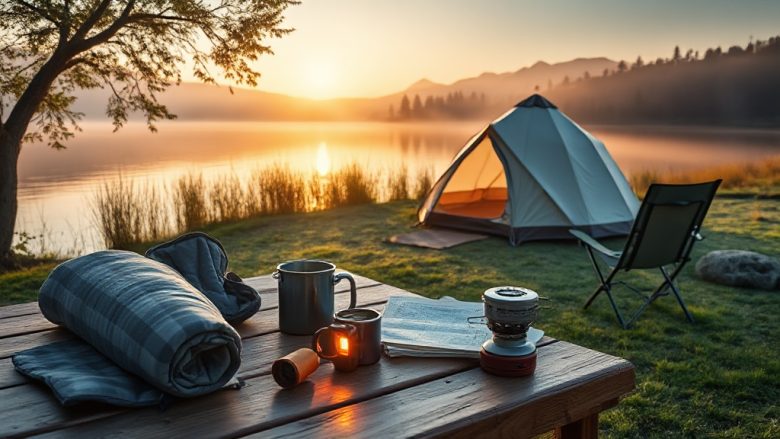
Here’s the short version of what actually matters. A tent with a full set of pegs and a mallet. A sleeping bag rated for colder than the forecast. A sleeping mat, because the ground steals heat faster than the air does. A head torch with spare batteries. A small gas stove, a lighter, and a pan. A water container. Food that doesn’t need refrigeration for the first night. A bin bag for rubbish. A basic first aid kit with plasters and painkillers. And a spare jumper you’ll be very glad you packed when the temperature drops at 2am.
Layers matter more than bulk. A thermal base layer, a fleece, and a waterproof shell will keep you comfortable through most British evenings. Cotton is the enemy once it gets damp, so leave the jeans at home and bring something that dries quickly. Pack everything into one or two bags you can carry in a single trip from the car, because you will absolutely resent a third journey.
One more thing: practise putting the tent up in the garden before you go. Reading the instructions in the dark, with cold hands, is a special kind of misery.
3. Choose Your Pitch Like You Mean It
Pitch selection is the quiet skill that separates a good night’s sleep from a soggy one. Arrive earlier than you think you need to. Late arrivals get the leftover spots, and those are usually leftover for a reason.
Look for slightly raised ground. The bottom of a gentle slope collects water when it rains, and you’ll feel every lump through your sleeping mat. Avoid pitching directly under trees, because branches drip long after the rain stops and dead wood has a habit of falling. Stay away from the very edge of a field where the wind hits hardest, but don’t tuck yourself into a hollow either, since cold air settles in low spots overnight.
Check where the sun rises. A pitch facing east means a warm, bright start, which sounds lovely until it’s 5am in midsummer. If you like a lie-in, face west. Keep a sensible distance from other tents, both for privacy and because sound travels further than you’d expect in open ground. And before you hammer in a single peg, lie down where the tent will go. If you can feel a root or a stone through your back, move the tent.
Once you’ve picked your spot, clear it of twigs and stones, lay your groundsheet, and orient the door away from the prevailing wind. Small decisions like these make a bigger difference than any piece of expensive kit.
4. Learn to Cook Simple Food Without Drama
Camp cooking goes wrong when beginners try to recreate a Sunday roast on a single burner. Keep it simple for your first trip. Pasta with a jar of sauce. Pre-chopped vegetables. A one-pot chilli you made at home and reheated. Oats with dried fruit for breakfast. Coffee from a cafetière or instant sachets, depending on how much you care.
Cook before you’re hungry. Everything takes longer outdoors, especially when the wind is against you. Set up your stove on a flat, stable surface, well away from the tent walls, and never cook inside a closed tent. Carbon monoxide is a real risk and it doesn’t announce itself.
Wash up straight after eating, using as little water as possible. Food left out attracts wildlife, and nobody wants to be woken by a fox rummaging through their pans at 3am. Bring a small washing-up bowl and a biodegradable soap, and tip grey water away from your pitch.
If you can, do a trial run of your stove at home first. Nothing kills the mood faster than discovering your burner won’t light when you’re hungry and it’s getting dark.
5. Stay Warm, Stay Dry, and Don’t Fight the Weather
Cold and wet are the two things that turn a fun first trip into a story you tell through gritted teeth. Both are manageable with a bit of foresight.
Put on tomorrow’s clothes before you get into your sleeping bag. It sounds odd, but it keeps you warmer overnight and saves you dressing in the cold at dawn. Wear a hat. Fill a water bottle with hot water, wrap it in a sock, and tuck it into the bottom of your sleeping bag as a makeshift hot water bottle. Keep your boots inside the tent porch, upside down, so they don’t fill with rain or curious insects.
If rain is forecast, accept it. Bring a tarp or a small awning so you have somewhere dry to sit. Have a book, a pack of cards, or a downloaded podcast ready for the hours you’d otherwise spend staring at the tent ceiling. The people who enjoy camping in Britain are the people who stopped expecting sunshine and started packing for the actual weather.
And when the forecast turns genuinely dangerous, with high winds or thunderstorms, don’t tough it out. Pack up and go home. There’s no prize for enduring a night you’ll never forget for the wrong reasons.
That’s the whole checklist, really. Start small. Pack for sleep, warmth, and food. Choose your pitch with care. Cook simply. Respect the weather. Do those five things and your first trip will be a memory you actually want to keep, pegs and all. The rest you’ll learn by doing, one slightly damp morning at a time.