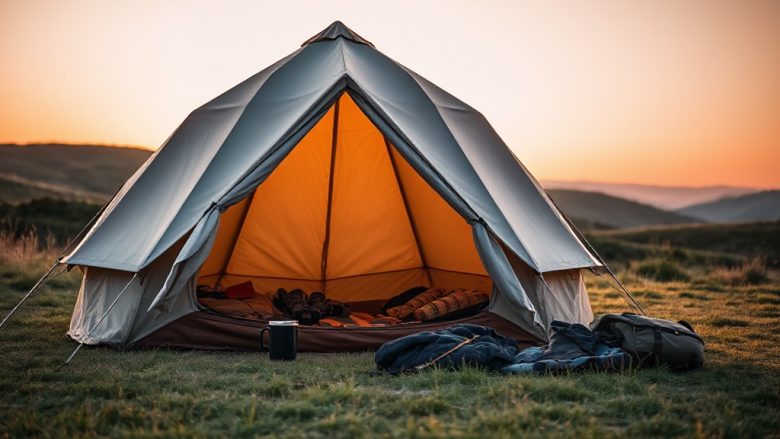
Every camping trip starts with one decision: where will you sleep? Not what stove to buy, not which boots are best. Where you sleep shapes everything else — how much kit you carry, how much you spend, what you eat, and whether you come home hooked or vowing never to do it again. Get that one choice right and the rest of these camping tips for beginners fall into place.
I’ve taken a lot of first-timers into the outdoors, and the pattern is always the same. People overbuy gear they don’t need and underthink the boring stuff: the booking, the pitch, the pack-down. This checklist works backwards from your sleeping setup so nothing important gets missed.
1. Choose Where You’ll Sleep, Then Book It
For a first trip, a managed campsite beats wild camping every time. You get toilets, a water tap, a defined pitch, and someone nearby if things go sideways at 2am. That safety net matters more than the view when you’re still learning.
Decide between three options before you look at anything else. A tent is the classic choice and the cheapest way in, but it needs the most effort. A campervan or a rented cabin on a site removes the pitching problem entirely and lets you test whether you even enjoy being outdoors overnight. Hiking huts and bunkhouses sit in the middle — solid walls, shared facilities, no gear to dry in the morning.
Once you’ve picked, book early. Popular sites near towns and coastlines fill up months ahead for weekends and school holidays, and turning up on spec is a gamble you don’t want to take on your first night. Check three things when you book: pitch size, whether fires or barbecues are allowed, and the arrival window. Some sites lock their gates after a certain hour, and arriving late with a car full of kit and no idea where to pitch is a miserable introduction.
If you’re going somewhere remote, tell someone your plan. Where you’re going, when you expect to arrive, when you’ll be back. It takes two minutes and it’s the single most useful habit you can build.
2. Kit: Buy Less Than You Think
The internet will try to sell you a hundred items. You need about fifteen. For a first trip, borrow or rent the big stuff — tent, sleeping bag, stove — before committing money. A borrowed tent that leaks teaches you what to look for without costing you anything.
The essentials break down simply. Shelter: a tent rated for the season you’re camping in, plus a groundsheet and spare pegs. Sleep: a sleeping bag matched to the temperature (check the comfort rating, not the extreme one), a sleeping mat for insulation, and a pillow you can squash. Cooking: a small stove, fuel, a lighter, a pot, and a bowl or two. Light: a head torch per person, plus a lantern for the tent. Clothing: layers you can add and remove, a waterproof shell, and dry socks — always more socks than you think.
Then the small things that make a big difference. A bin bag for rubbish and another for wet clothes. Duct tape. A basic first-aid kit with plasters, painkillers, and blister treatment. A power bank. And a mallet for the pegs, because you will not be able to push them in by hand.
Leave behind the fancy gadgets. You don’t need a folding kitchen unit, a solar shower, or a hatchet on your first trip. Every extra item is weight you carry, space you lose, and something else to pack away wet.
3. Food and Water Without the Fuss
Camp cooking is simple if you plan one-pot meals. Chilli, pasta, curry, soup — things that go in one pan and come out edible. Pre-chop vegetables at home and bag them by meal. It saves time, saves washing up, and means you’re not fumbling with a knife in the dark.
Plan your first night’s dinner to need no cooking at all. You’ll be tired from travel and setup, and a sandwich eaten sitting down beats a complicated meal eaten standing up. Save the proper cooking for night two, when you’ve found your rhythm.
Water is the thing beginners underestimate. Check whether your site has drinking water on tap. If it doesn’t, bring more than you think you need — roughly two litres per person per day for drinking and basic washing, more if it’s hot. A collapsible water container is worth the small cost.
Store food properly overnight. Sealed boxes or a cool bag inside your tent’s porch, never loose in the tent itself. Wildlife is bolder than you expect, and a fox or a mouse investigating your bag at 3am will wake the whole site.
4. Pitching Your Tent Without Tears
Arrive with daylight to spare. Pitching in the dark is the classic first-timer mistake, and it turns a ten-minute job into an hour of swearing.
Pick your spot with care. Flat ground, no obvious dips where water will pool, and not directly under trees — branches drop sap and, in a storm, worse. Keep a sensible distance from other tents; nobody wants to hear your zip at midnight. Face the door away from the prevailing wind if you can work out which way it’s blowing.
Pitch the tent before you inflate anything or unpack the car. Lay out the footprint or groundsheet, thread the poles, and peg the corners loosely first so you can adjust. Only tighten everything once the shape is right. If it’s windy, peg one corner and let the tent stream downwind while you work — fighting a flapping tent alone is a losing game.
Then set up your sleeping area properly. Mat first, then bag, then pillow. Keep your bag dry and don’t leave it compressed all day. Organise the porch: shoes one side, cooking kit the other, so you’re not crawling over everything to find a torch.
Before dark, walk the site. Find the toilets, the water tap, and the bin. You’ll thank yourself later.
5. Leaving No Trace and Heading Home Clean
The mark of a good camper isn’t how they set up. It’s how they leave.
Pack out everything you brought in. Every wrapper, every bit of food, every broken peg. If the site has bins, use them; if it doesn’t, take it home. Leaving rubbish behind ruins the place for the next person and, on many sites, gets you banned.
Dismantle your tent dry if you possibly can. A tent packed away wet will smell and mildew within days. If you have no choice, dry it fully at home before storing it. Shake out the groundsheet, check for pegs you’ve left in the grass, and count your poles.
Before you drive off, do a slow lap of your pitch. First-timers leave phone chargers, tent pegs, and entire pairs of shoes behind more often than you’d believe. Then check the fire pit or barbecue is completely cold, and that you’ve left the pitch as you found it.
When things go wrong: three common first-trip problems
You’re cold at night. Nine times out of ten it’s the mat, not the bag. The ground pulls heat out of you all night, so a decent insulated mat matters as much as the sleeping bag. Add a hat, wear dry socks, and eat something before bed — your body generates heat digesting food.
It rains and everything gets wet. Keep one dry set of clothes sealed in a bag and don’t touch it until morning. Put wet gear in a separate bag, not back in the tent. If the tent leaks at a seam, a strip of duct tape will hold until you get home. Rain is not a disaster; wet clothes with no dry backup is.
You can’t sleep. New sounds, unfamiliar ground, and early darkness all mess with your head the first night. Bring earplugs, keep your torch dim and red if it has the setting, and don’t fight it. Most people sleep badly on night one and fine on night two. It’s normal.
Your first night
Here’s how it actually goes when it works. You arrive mid-afternoon, pitch while there’s still light, and get your sleeping area sorted before you think about dinner. You eat something easy, walk to the toilets once to learn the route, and sit outside as the light goes. When you turn in, your torch is by your head, your boots are in the porch, and your water bottle is within reach.
You’ll probably wake at some point in the night. That’s fine. Lie still, listen to whatever’s out there, and let it settle. By the second morning you’ll be making tea in the open air wondering why you waited so long to try this. That’s the whole point of these camping tips for beginners — not to make you an expert overnight, but to get you through the first trip comfortably enough that there’s a second one.